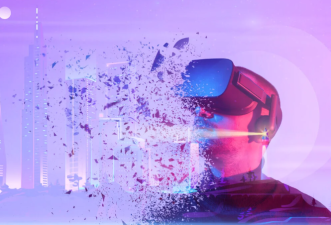
The metaverse, also known as the meta-universe, metaphysical universe, meta-realm, extrasensory space, or virtual space, is an online virtual space that interacts with the real world. All events in this space occur in real time and have a permanent impact. There is no definitive definition of the "metaverse" yet. Wikipedia describes it as: a virtual augmented physical reality, a 3D virtual space with convergent and physically persistent characteristics, based on the future internet, and possessing connected perception and sharing features.
With the advent of Internet 3.0, Industry 4.0, and Society 5.0, the metaverse has become a highly anticipated industrial field and research hotspot. As a positive vision of the ultimate form of future society, the relationship between the virtual world constructed by the metaverse and the real world has become a focal point of discussion.
What is Metaverse?
In the computer science field, "meta" refers to metadata, and "verse" is an abbreviation for universe, signifying the exploration of reconstructing a virtual world outside the real world. This includes all virtual worlds, AR, and the internet.
The term "Metaverse" describes a future iteration of the internet, comprised of shared, 3D virtual spaces linked together, and perceptible virtual worlds. The Metaverse can be broadly understood as a more immersive and participatory internet, with games serving as its ideal medium.
The Metaverse possesses seven characteristics:
Real-time realism, social interaction, flow state, interoperability, platform nature, economic system, and openness. The Metaverse is not synonymous with "virtual space," "virtual economy," or simply a game or UGC platform.
Real-time and realism: All elements are based on sufficiently realistic sensory effects. Technologies such as motion capture, digital twins, and digital avatars, along with more intuitive and realistic interaction methods represented by head-mounted displays, are the cornerstones of building virtual worlds.
Social interaction: The Metaverse breaks down the boundaries of physical space to the greatest extent possible, providing highly interactive, shared, and participatory social experiences, and offering more social gameplay than offline, prompting various social activities to shift online.
Flow state: Through richer content, more immersive experiences, and more natural interactions, users can easily enter a more powerful and sustained state of flow.
Interoperability: By decentralizing the storage of in-game items and settings on the blockchain, players can truly own their virtual assets and bring them to different game worlds.
Platform Capability: It can accommodate a large amount of second-party (referring to the metaverse's ability to accommodate various IPs such as film, sports, entertainment, fashion, and even tourist attractions) and third-party (encouraging user-generated content (UGC)) content.
Economic System: Players' virtual items and creative achievements in the metaverse can also be converted into digital assets. Individuals and businesses can create, own, invest, and sell, and can create value through work.
Openness: Through protocols or ecosystems built on the blockchain, creators can obtain reasonable compensation through free competition, and consumers are also adequately protected.
Current Development Status
Market Size: The global metaverse market continues to expand, reaching $280 billion in 2022, and is expected to maintain rapid growth in the coming years.
Policy Support: Governments around the world have introduced relevant policies to support the development of the metaverse industry. Developed countries such as the United States, the United Kingdom, and Japan have increased investment and policy support.
Technological Innovation: The metaverse integrates a series of advanced technologies such as 5G, cloud computing, artificial intelligence, virtual reality, and blockchain. The continuous maturation and application of these technologies have driven the rapid development of the metaverse market.
Market Competition: The global metaverse market is highly competitive, with major tech giants actively entering the field and emerging companies constantly appearing.
Implementation Paths
The implementation paths for the metaverse are as follows:
Immersion and Overlay
The immersive path is represented by VR technology. For example, wearing VR devices allows users to enter an immersive, personalized scene where "everything is within my grasp." This scene is both immersive and intensifying. The overlay path is represented by AR technology, which builds upon and expands upon existing conditions. For example, adding physical appearance and emotional intelligence to ordinary robots, making them lifelike.
Radical and Gradual Approaches
There have always been two approaches to the metaverse: radical and gradual. For example, Rolox represents the radical approach, providing only a development platform and community from the beginning, without offering games, attracting users with a creation incentive mechanism to achieve a completely user-created decentralized world. This means anyone can enter this space to edit, create scripts, or set game levels, etc.
Openness and Closedness
The metaverse also involves two relationships: openness and closedness. This relationship is more evident in the mobile phone market; for example, Apple's system is a closed system, with both hardware and software being closed. I summarize this logic as "I am the universe."
Conclusion
With continuous technological advancements and increasing demand for the virtual world, the metaverse is expected to become an important form of the next generation of the internet, profoundly changing our lives, work, and social interactions.
Perhaps in the near future, our lives will freely switch between the real world and the metaverse, ushering in a completely new lifestyle.